
When to Refinance a Mortgage in Canada
When to Refinance Your Mortgage.
Refinancing a mortgage means replacing your existing home loan with a new one – ideally on better terms. Unlock equity, lower your rates, and build a stronger financial future.
What Does It Mean to Refinance?
Mortgage refinancing is essentially paying off your current mortgage with a brand new one. You end your old loan and start a new mortgage, ideally with terms that better suit your needs. This gives you an opportunity to restructure your debt to better fit your current financial situation.
Why Homeowners Refinance
Refinancing is commonly used to achieve certain goals:
- Capture a lower interest rate
- Switch from variable to fixed (or vice versa)
- Access home equity (cash-out)
- Consolidate high-interest debts into the mortgage
Refinance vs. Renewal
Important Distinction:
Renewal
Straightforward process at the end of your term with your current lender. Involves no new money; you simply agree to a new rate for the remaining balance.
Refinancing
Often involves increasing your mortgage amount or changing lenders mid-stream. This triggers a brand new mortgage agreement and potential costs.
How Mortgage Refinancing Works
When you refinance, you apply for a new mortgage loan just as you did when you first purchased your home.
Assess Equity
You typically need 20% equity. Lenders allow borrowing up to 80% of appraised value.
Shop Rates
Compare rates with current and new lenders. Even a small difference can mean tens of thousands in savings over the term.
Get Approved
Submit income docs and undergo a credit check. Lenders ensure your Total Debt Service (TDS) ratio is under 44%.
Closing
A real estate lawyer handles title registration. The process takes roughly 3-4 weeks from application to finish.
When Is the Best Time to Refinance?
Timing is critical. Refinancing at the wrong time could mean paying hefty penalties, whereas timing it right maximizes your benefits.
Near the End of Your Term
Avoid prepayment penalties by waiting until your mortgage (e.g., 5-year fixed) is maturing.
Interest Rate Drops (1% Rule)
If rates fall ~1% below your current rate, the interest savings often outweigh the break penalties.
Urgent Capital Needs
Access equity for renovations or child education when mortgage rates are cheaper than personal loans.
The Break-Even Logic
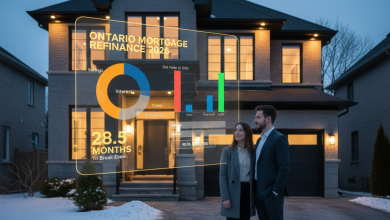
If your new rate saves you $200/mo and the penalty is $4,000:
Break Even
“If you have more time remaining in your term than the break-even period, refinancing makes financial sense.”
Costs & Potential Savings
Refinancing isn’t free – but the long-term gains can be substantial.
Typical Refinance Costs
Weighing Your Savings
Calculate the total interest you’d pay on your current loan versus the new rate. Rolling $20,000 credit card debt at 18% into a 5% mortgage can save thousands per year.
Pro Tip
Keep the same payment amount after dropping your rate to pay off principal significantly faster.
Interest Savings Projection
Consolidate High-Interest Debt
Rolling credit cards or car loans into your mortgage turns unsecured debt into secured debt with a much lower interest rate. You get a single monthly payment and drastically improved cash flow.
⚠️ Caution
“Only makes sense if you address the behavior that led to the debt. Don’t rack up the cards again once they’re clear.”
Tapping Into Your Equity
Your home is a valuable asset. Refinancing allows you to tap up to 80% of your value for renovations, rental property investments, or funding education.
Cash-Out Refi
Fixed rate, structured payment. Best for one-time large expenses.
HELOC
Variable rate, interest-only payments. Best for ongoing flexibility.
How Your Credit Affects Refinancing
Excellent credit (740+) unlocks the lowest advertised rates. Prime lenders typically want to see at least a mid-600 score.
Rate Impact
Better scores equal better rates. If your score has improved since your last mortgage, you’re in a prime position to save.
Bad Credit Refi
Still possible through “B” lenders, but expect higher rates (several points above prime) and limited equity access (65-70%).
Switching Mortgage Types
Refinancing is your chance to reconsider your rate strategy.
Variable → Fixed
If prime rates are volatile and keeping you up at night, lock in a stable fixed rate. Mid-term variable penalties are just 3 months’ interest, making this an easy switch.
Fixed → Variable
If rates are high but expected to fall, a variable rate allows your payments to decrease automatically. Caution: breaking a fixed mortgage early can trigger large IRD penalties.
Making the Right Decision
Refinancing a mortgage in Canada can be one of the smartest financial moves you make – if the timing and terms are right. The best time to refinance is usually when you can secure a significantly lower interest rate or when you need to tap into your home’s equity for a worthwhile purpose.
Ask yourself: Will this move save me money? Do the benefits outweigh the costs? Am I refinancing at the right time? If yes, then refinancing could be a very beneficial strategy for you as a homeowner.

Alireza Asgarian
Ontario Mortgage Agent Level 2
Personalized Refinance Analysis. Free of Charge.
Every situation is unique. Reach out to Mortgage724.ca today. Let us help you determine the optimal time to refinance and find you the best rates available.